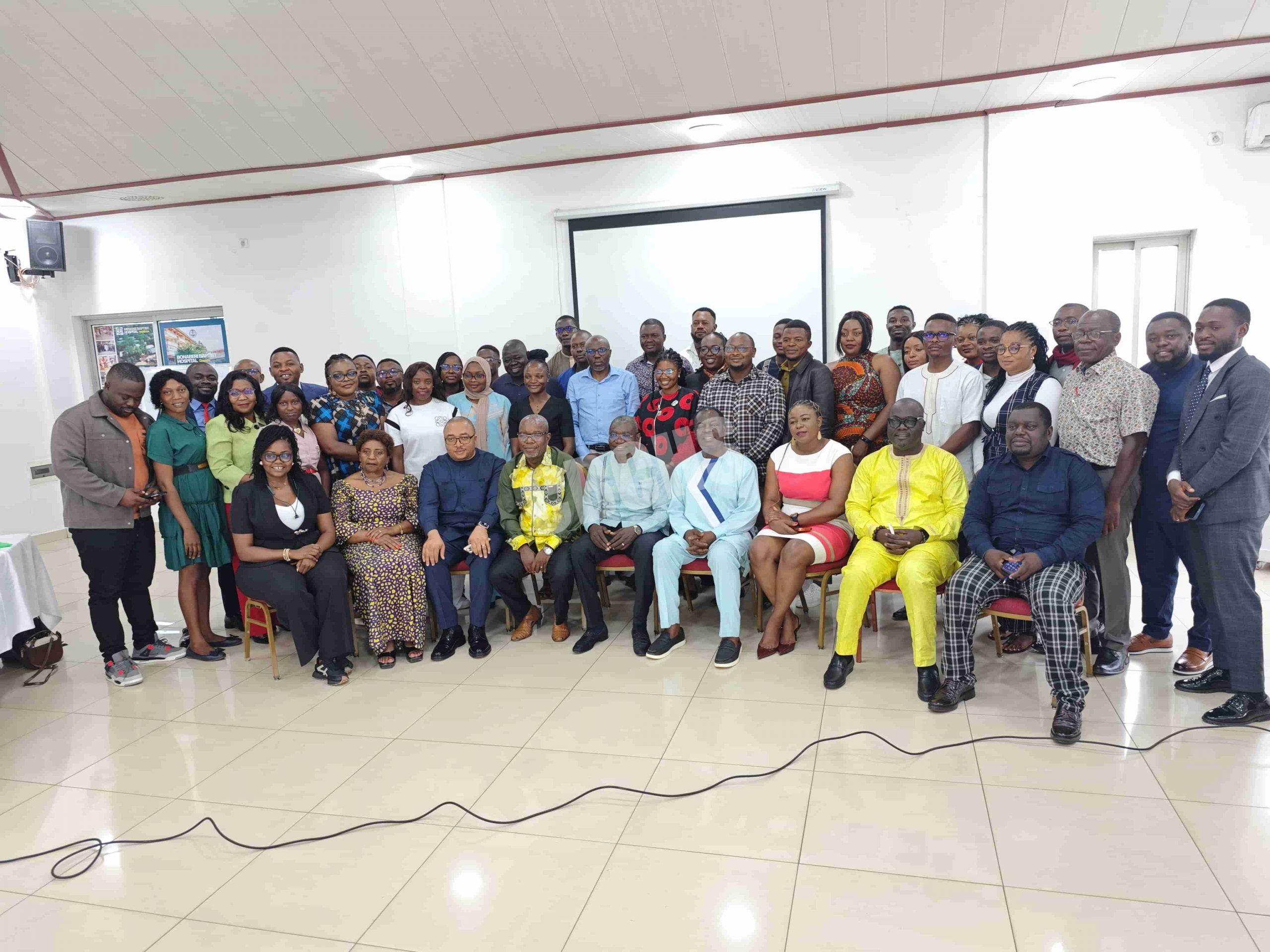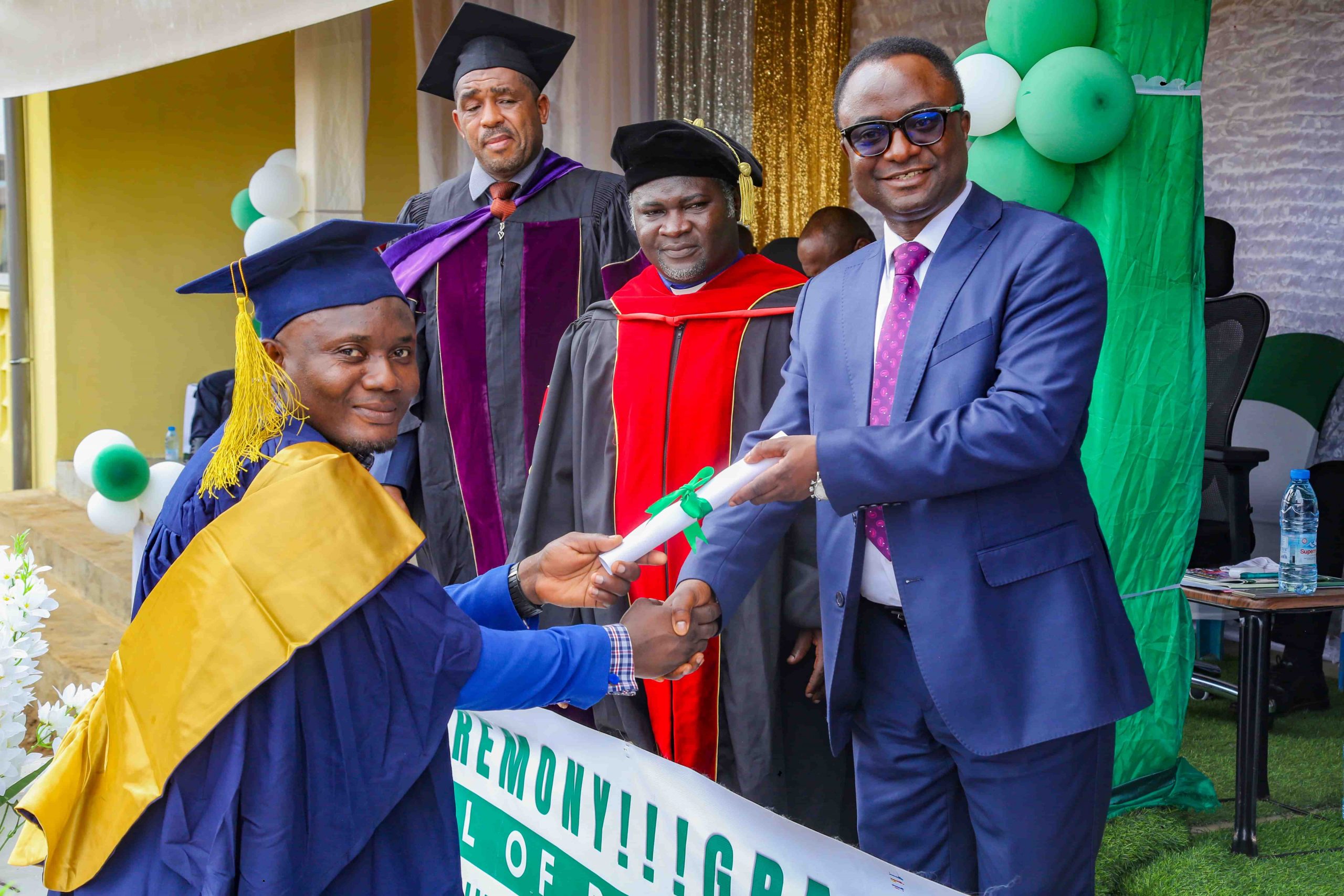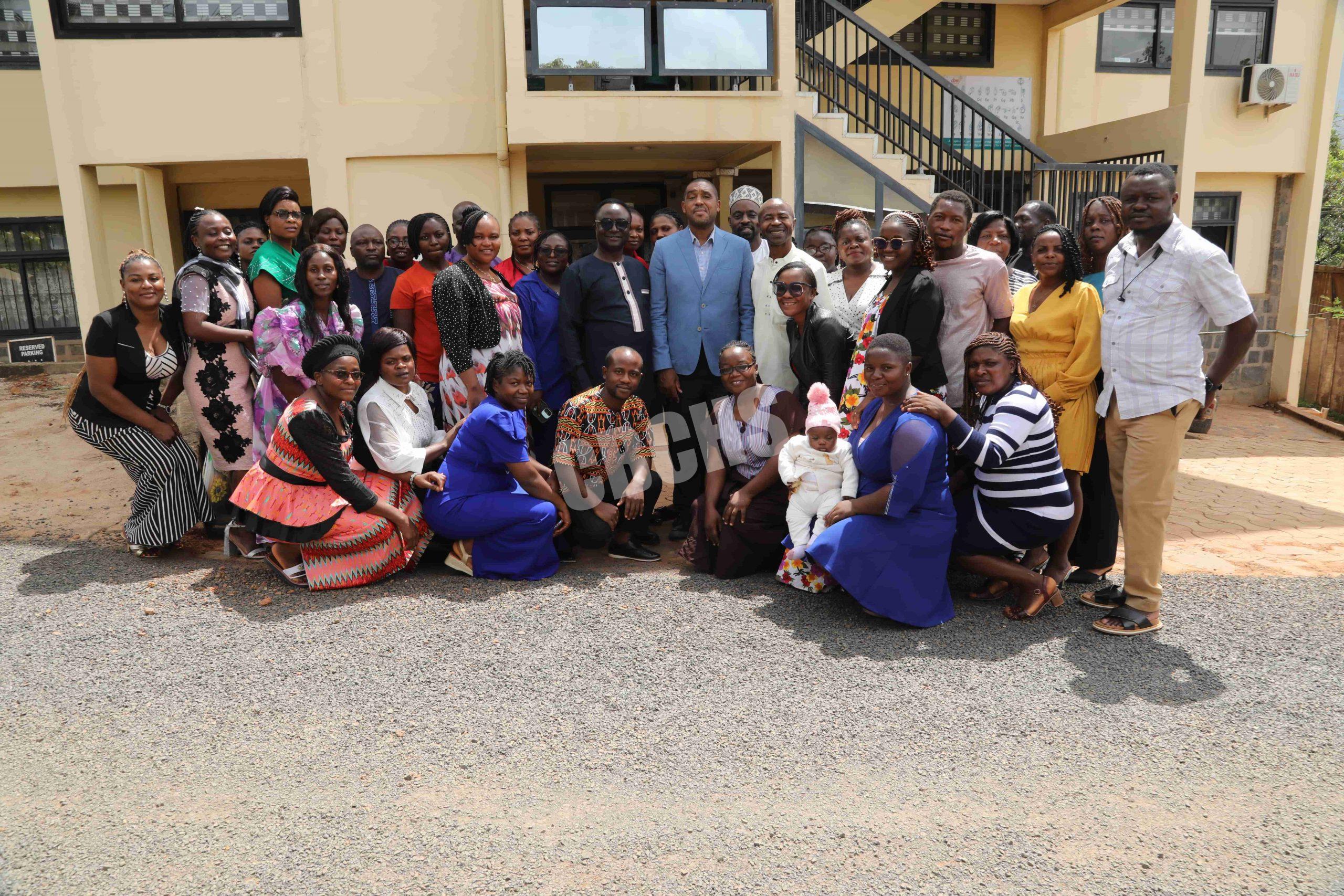
In a strategic move to stem the rising tide of chronic diseases, the CBC Health Services has concluded a high-impact, two-day intensive workshop designed to bridge the gap between clinical care and nutritional science. Held from May 7-8, 2026, at the Director of Health Services (DHS) Conference Hall, the session brought together a powerhouse team of Non-Communicable Disease (NCD) Nurses, Data Clerks, and Nutrition Counsellors from some 22 health facilities. The workshop didn’t just share knowledge; it redefined how healthcare is delivered within the organization, signalling a shift toward a more integrated, collaborative “Umbrella” model of patient care for NCDs.
In some cases, NCD management and nutritional counselling operated in parallel. However, as the Program Manager for the NCD Prevention and Control Program, Mr. Takwe Boniface, noted during the opening, “Changes occur daily, our teams need to blend their work to avoid contrast in providing care. When we work under one umbrella, the patient benefits more,” he emphasized. The goal is simple but profound, to ensure that when a patient visits a CBC Health Services facility, the message they receive from their nurse aligns perfectly with the advice from their nutritionist.
The workshop also provided an emotional and spiritual boost to the frontline staff. Representing the Director of Health Services, the Deputy Director for Administration and Finance, Mr. Warri Denis, offered an inspiring acknowledgement to the staff. Recognizing that many operate in “difficult contexts,” he commended their choice to rise above challenges rather than be defined by them. “You are the drivers of quality healthcare. Our mission statement only makes sense because of you,” Mr. Warri stated. He urged the team to maintain the organization’s “unique selling point”, the integration of professional excellence with spiritual compassion.
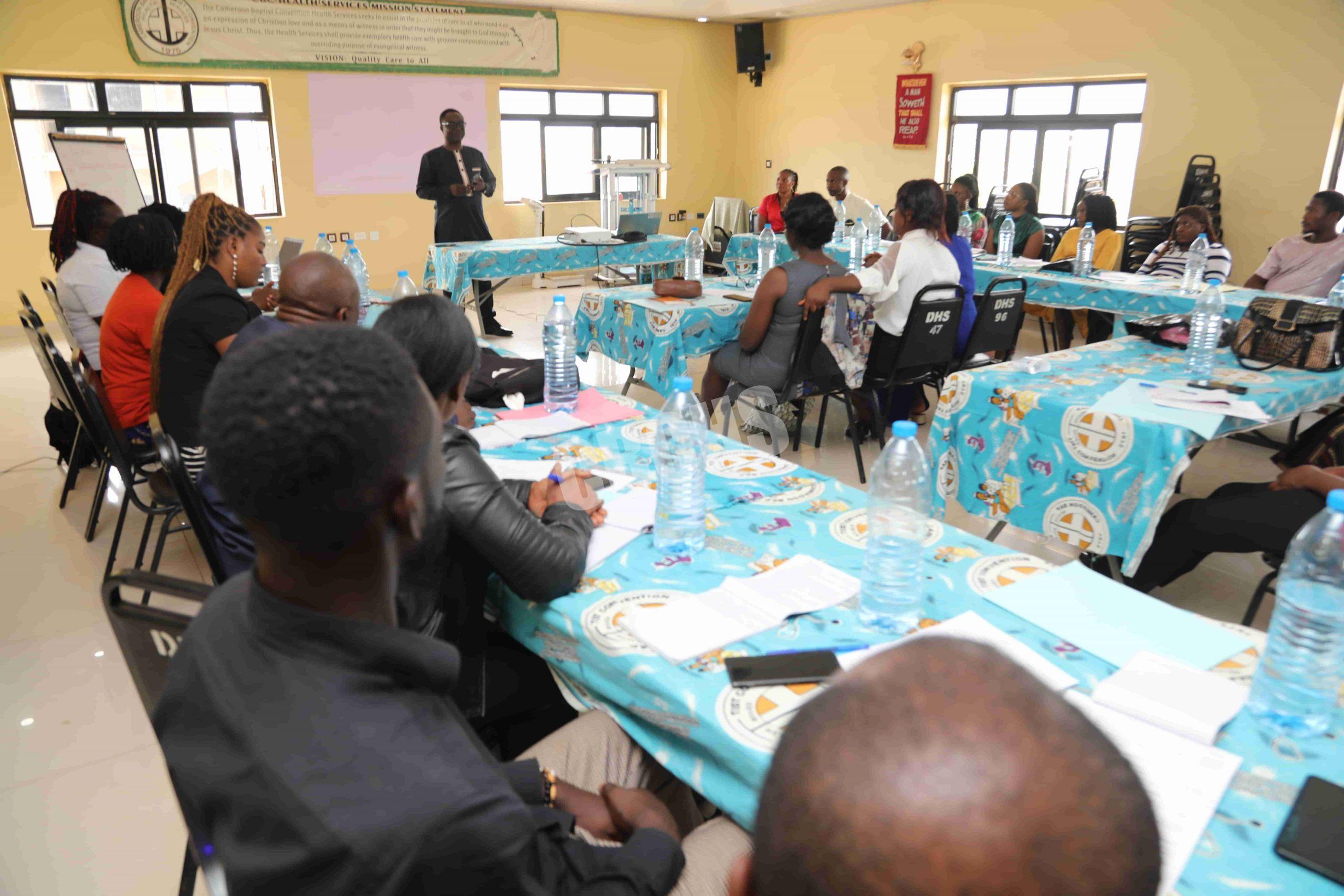
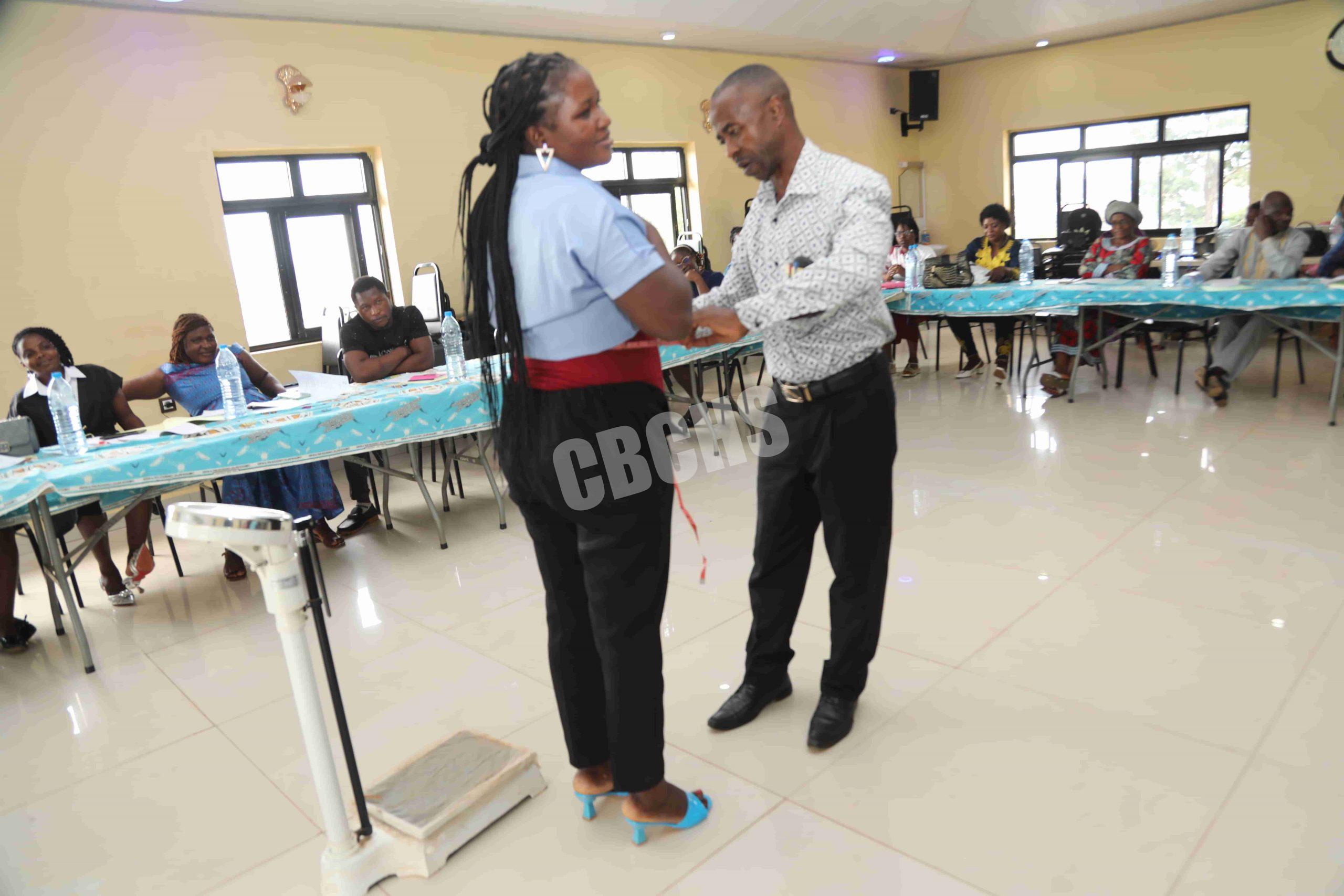
The two-day agenda was packed with technical sessions aimed at standardizing care across all sites. Participants engaged in hands-on training in the calibration of medical equipment and the accurate interpretation of risk scores. Detailed modules on the pathophysiology and diagnosis of diabetes, hypertension, and obesity.
Mme Kinghang Berenice, NIP Supervisor, delivered a compelling presentation on the role of traditional versus westernized diets. She highlighted that the shift toward processed foods is a primary driver of NCDs and taught staff how to help patients “quantify” their food for better health outcomes.
A vital part of the training was led by Program Officer, Mme Nfor Shirley, who provided an in-depth exploration of nutritional strategies specifically tailored for the management of diabetes, hypertension, and obesity. She emphasized that medical treatment must be supported by precise dietary choices to be truly effective. She also guided participants through the intricate process of filling registers.
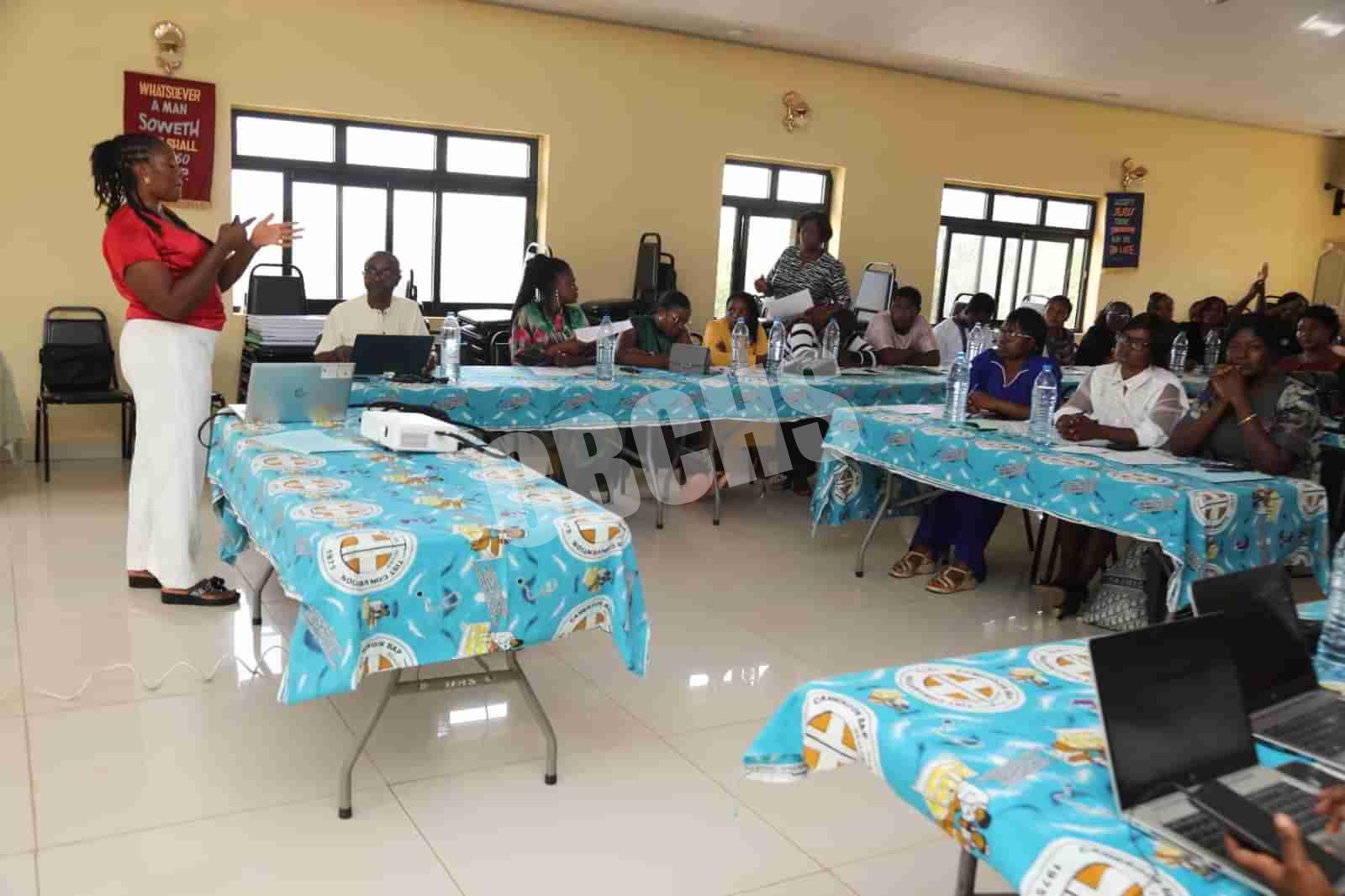
On his part, Sports Coordinator, Mr. Monju Elvis provided “exercise prescriptions,” teaching staff how to guide patients on the frequency and intensity of physical activity needed to achieve clinical results. The workshop also addressed the vital role of data in healthcare sustainability through sessions led by the Monitoring and Evaluation (M&E) Officer, Mr. Yuniwo Alfred. He provided a practical roadmap for navigating the NCD reporting tools, emphasizing that accurate data collection is the backbone of effective program management.
There was a session on Behaviour Change Communication (BCC). Recognizing that medical knowledge only works if the patient acts on it, the Communication Officer, Freida Nemkul emphasized the 7 Cs of behaviour change communication being Clear, Concise, Concrete, Correct, Coherent, Complete, and Courteous. Staff were challenged to craft compelling messages that resonate with their specific audiences to ensure that real lifestyle changes occur.
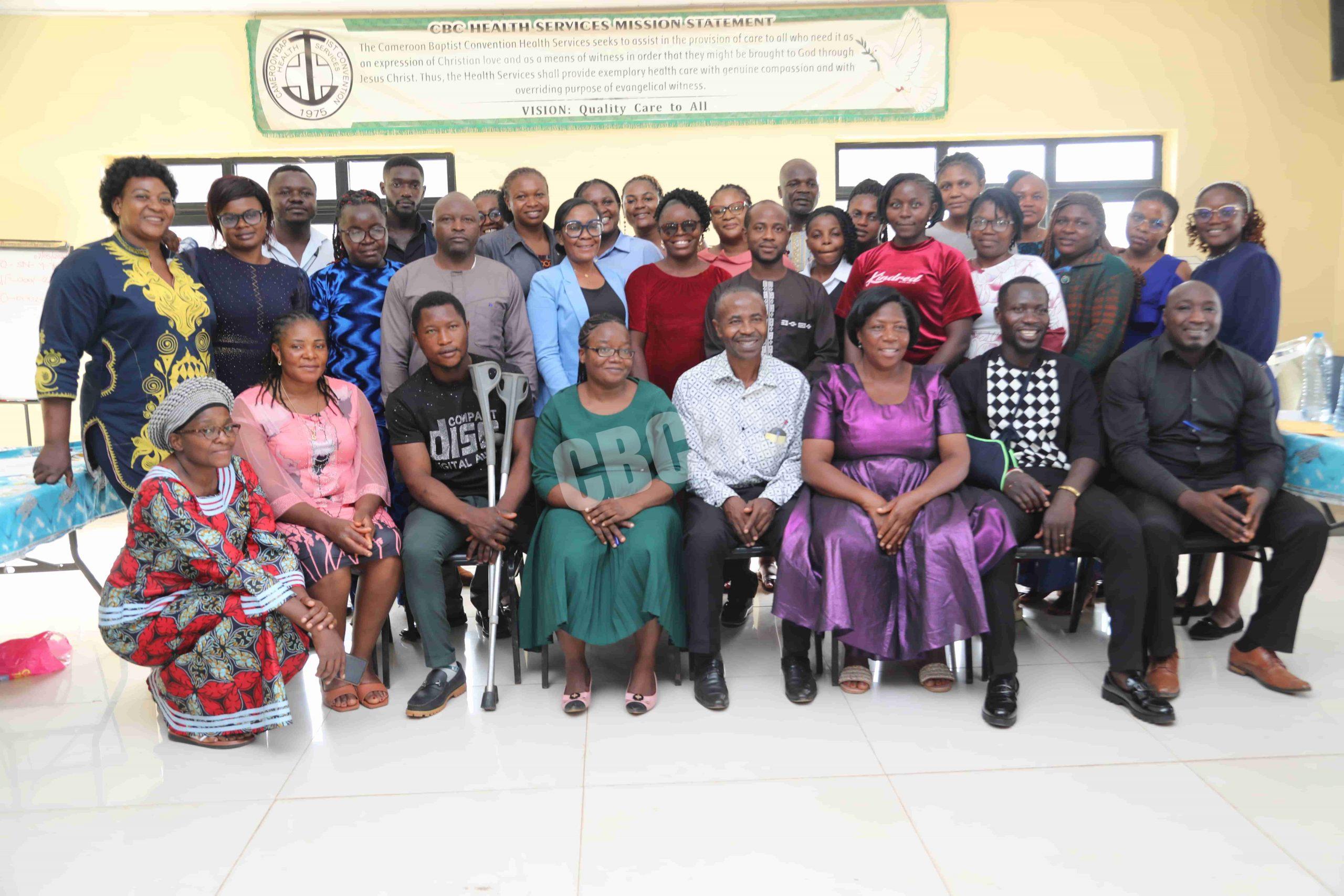
The workshop concluded on a high note with the official addition of four new sites to the NCD Prevention and Control Program, including Ashong and Idenau Baptist Health Centers. Participants from new sites like Nita Malson and Ratasula, expressed their readiness to hit the ground running. “I’ve learned how to monitor the vitals—height, circumference, and BMI—and how to communicate the risks to patients in a language they understand,” shared Ratasula.
As these trained professionals return to their stations, from Baptist Hospital Banyo to Mbingo Baptist Hospital and beyond, they carry with them more than just new skills. They carry a unified vision: a stronger, healthier Cameroon, fought for one integrated consultation at a time.