June 3, every year, is World Clubfoot Day, commemorated globally to raise awareness about clubfoot which is a congenital foot deformity that can lead to disability in children if not treated early. World Clubfoot Day is also set aside to promote the Ponseti technique of treatment which is a non-surgical treatment method highly acclaimed as the best.
Twelve years after its launch, the Cameroon Clubfoot Care Programme (CCCP) is leveraging local skills to ensure the sustainability of clubfoot treatment amid a dwindling global aid. The Program has set up a local production unit for foot abduction braces and expanding to all ten regions of the country – as shrinking international aid forces a fundamental rethink of how health programs sustain themselves in the Global South.
The program, implemented by the CBC Health Services since 2014, has recorded significant institutional milestones over the years: securing government approval of the Ponseti technique as the national gold standard for clubfoot treatment, embedding clubfoot indicators into Cameroon’s District Health Information System, and integrating a Ponseti training module into the curriculum for physiotherapists, nurses, and midwives. More importantly, the Program Manager, Awa Jacques Chirac says the establishment of a local brace production unit in 2025 stands apart.
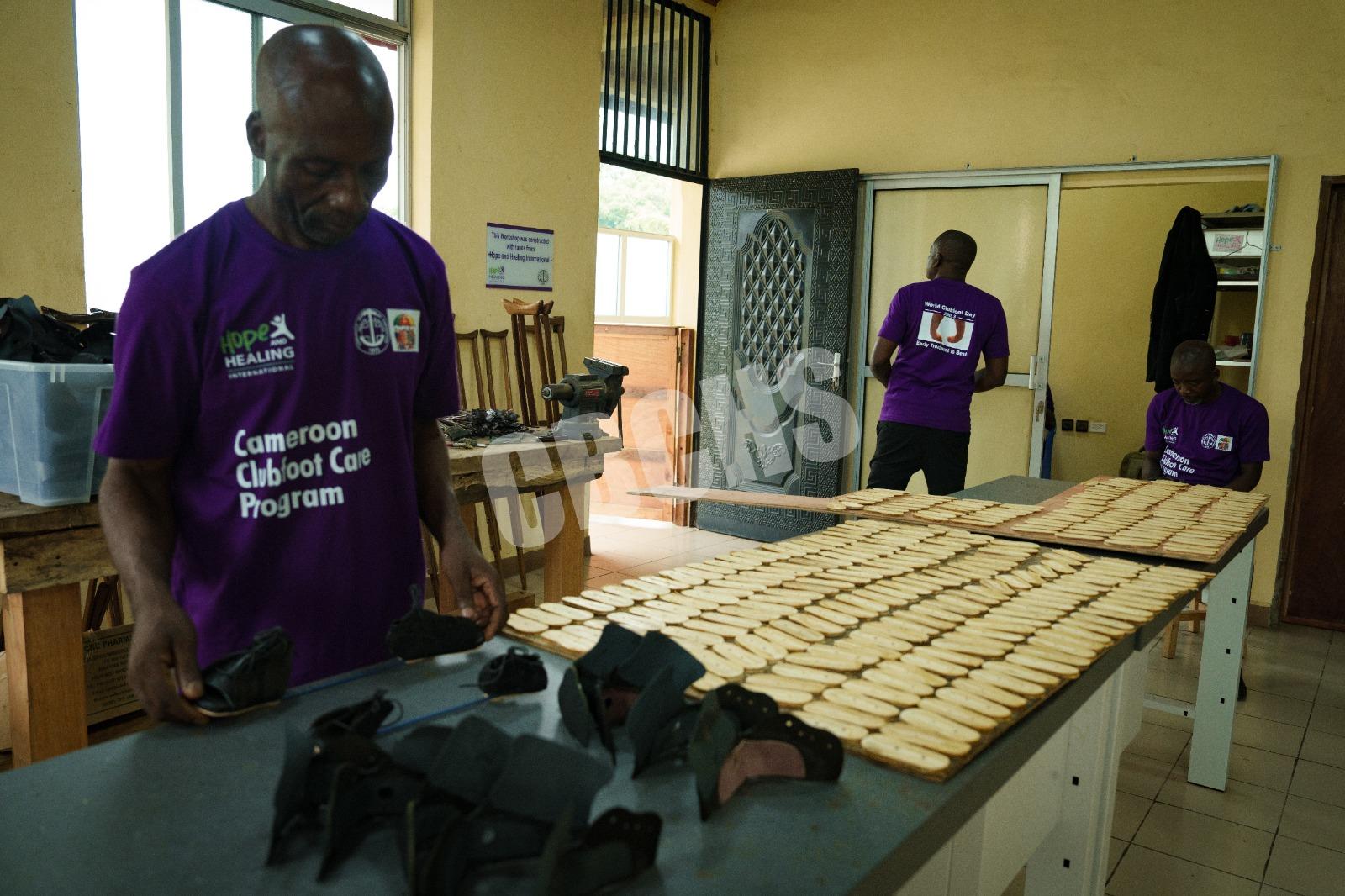
“The landscape of international development financing has experienced an unprecedented shift,” Awa told this reporter, citing OECD data showing a 23% decline in global Official Development Assistance, the largest annual contraction on record and the second consecutive year of shrinking aid to Africa. “For the Cameroon Clubfoot Care Program, we are taking a new posture,” Awa Chirac noted.
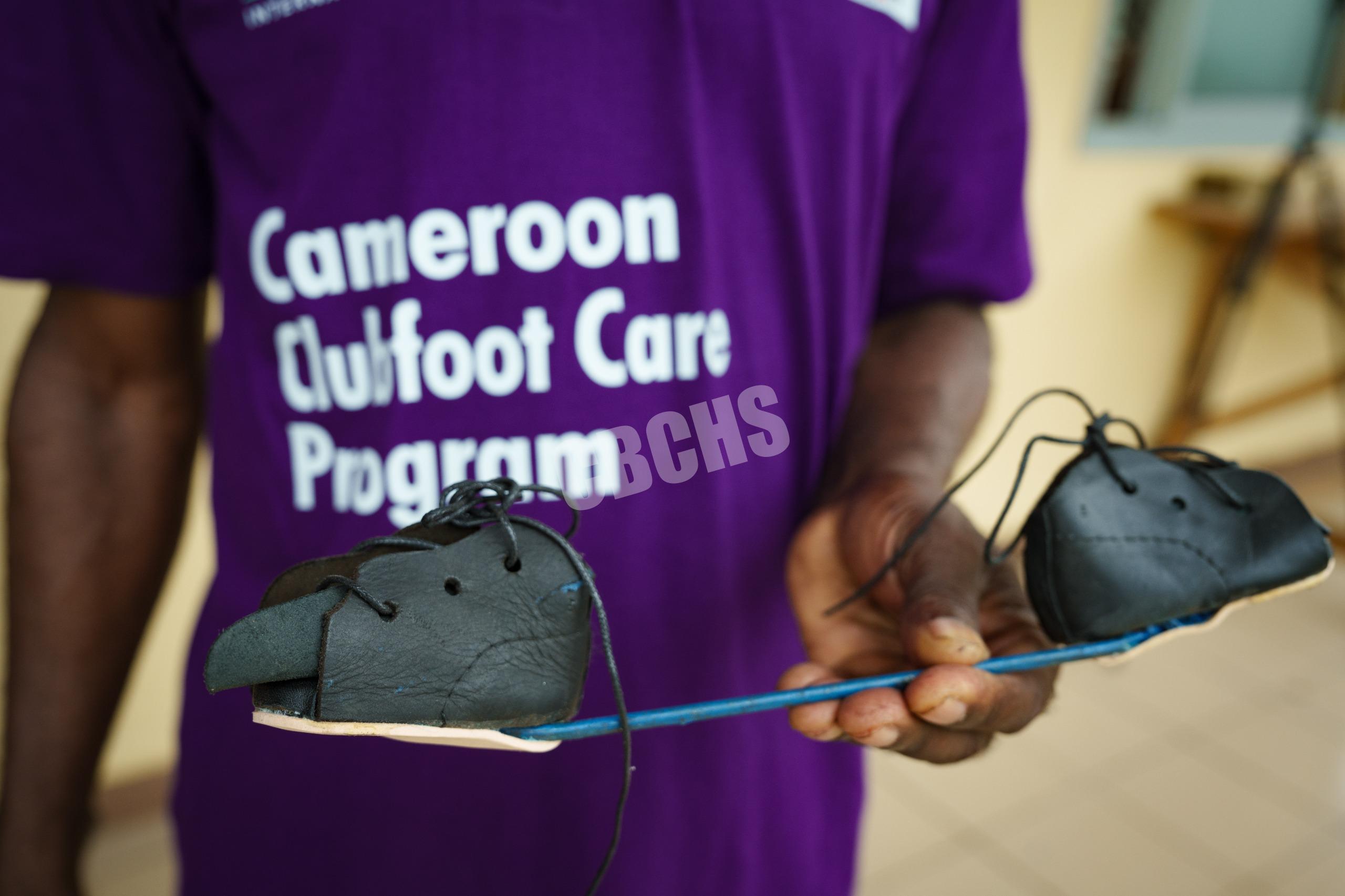
That new posture centres on a workshop now producing foot abduction braces using local materials, including leather, for distribution across the CCCP’s network of 30 clinics. Previously, the program depended on Iowa braces donated by Clubfoot Solutions. When supplies ran short, the clinical consequences were immediate.
Fanfon Timothy, a Ponseti technique expert and physiotherapy trainer with the program, describes the brace not as a supplementary tool but as the backbone of treatment. Under the Ponseti method, the first eight weeks of treatment involve correcting the clubfoot deformity through manipulation and plaster casting. Everything after that, up to four years depends on the brace.
“We cannot do without bracing,” Fanfon said. “If we are suddenly completely out of braces, we will not be able to say we are effectively treating clubfoot by the Ponseti method”.
Before local production began, stock-outs were a recurring problem. Specific brace sizes would run out, leaving mothers already overburdened by long distances, arriving at clinics empty-handed. “Sometimes the mothers come and they want to get the braces, they are not available,” Fanfon recalled.
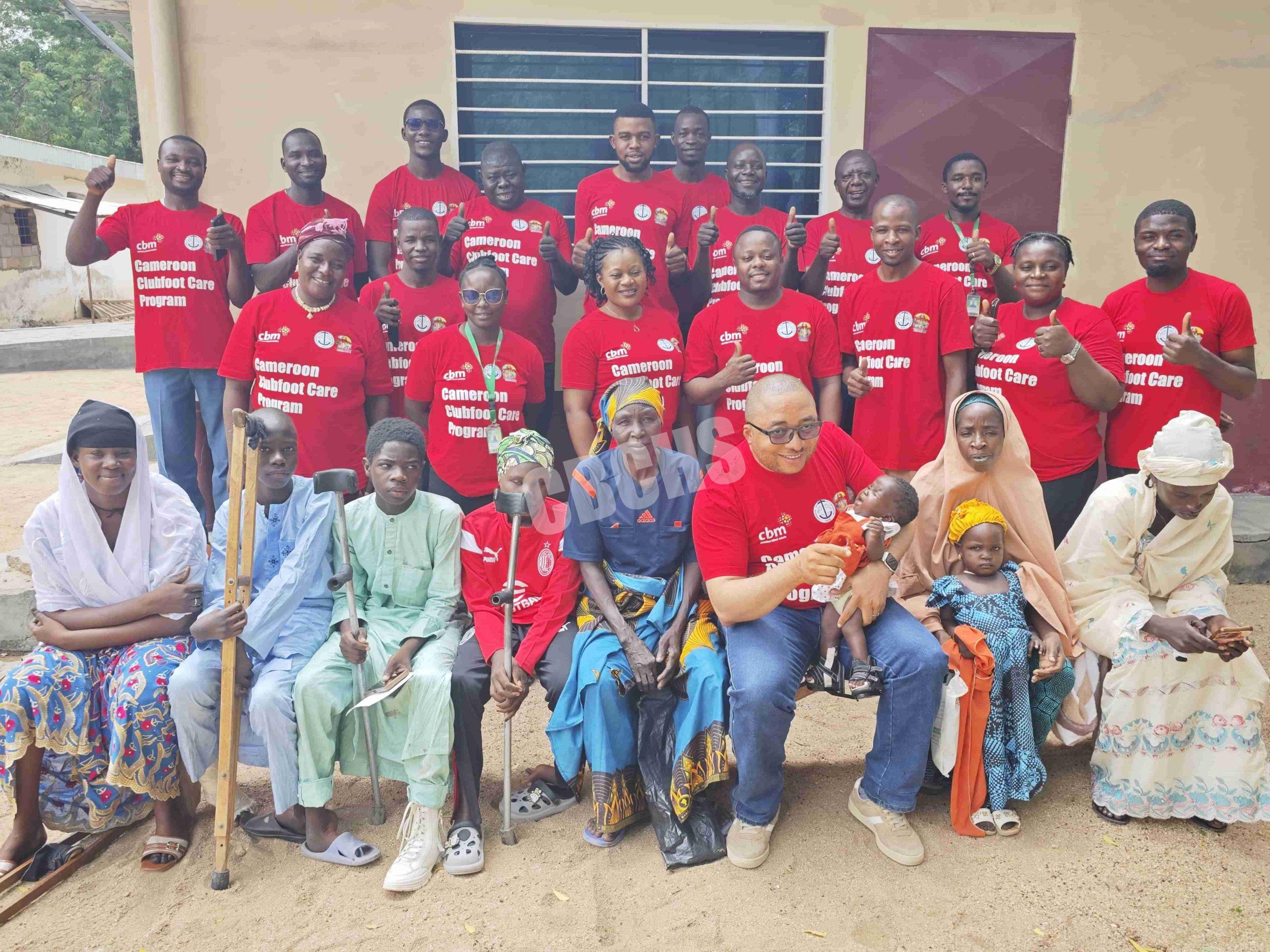
Beyond solving supply gaps, local production is already reducing costs. Awa says the program now purchases braces more affordably than sourcing from local private suppliers, whose uncoordinated market pricing tends to be higher. The ambition extends further – the workshop is expected to eventually supply other assistive technologies, including crutches, beyond the clubfoot clinic network.
Added the over 2,500 children treated for clubfoot, the CCCP has expanded institutional footprint significantly in 2026, with the Programme extending to all ten regions of Cameroon for the first time, achieving national coverage. A new clubfoot data management system for clinical documentation and decision-making has also been launched this year.
Awa says the local brace workshop is a direct response to a structural vulnerability that the global aid retreat has made impossible to ignore. “Sustaining local production is a better response,” he said. “It has multiple advantages, including boosting the local market”.
Globally, an estimated 200,000 babies are born with clubfoot each year, the majority in low- and middle-income countries. In Cameroon, at least 1,000 children are born with clubfoot annually.