Ignorance of International Humanitarian Law has caused many persons with disabilities to become more vulnerable, especially in crisis areas. Over the past few years, CBM has become increasingly engaged in conflict-driven and complex humanitarian crises. While the focus of the CBM’s work in such crises is on delivering disability inclusive humanitarian services, they are also confronted with stories from persons with disabilities about abuse of human rights. Therefore, CBM initiated a project that aims to focus more on rights violations in such conflict-driven contexts with the aim of strengthening the capacities of national and local Organizations of Persons with Disabilities (OPDs) on those topics.
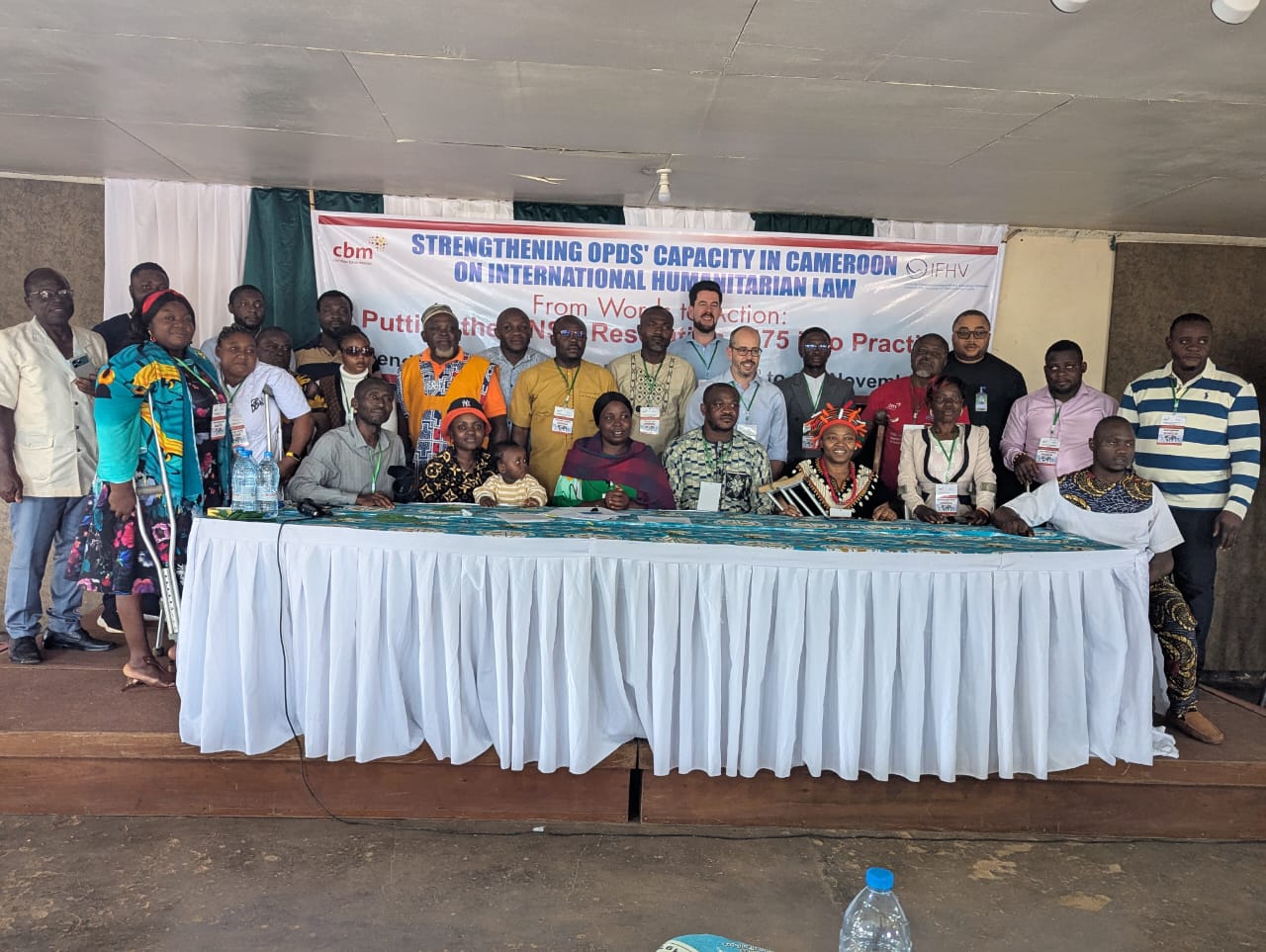
From this background, the CBM Country Office in Yaoundé organized a three-day pilot training for OPD representatives in Cameroon. The goal was to strengthen their capacities to understand, advocate for, and promote the rights of persons with disabilities affected by armed conflict. This was achieved by providing them with fundamental knowledge of International Humanitarian Law (IHL), the Convention on the Rights of Persons with Disabilities (CRPD), with a focus on Article 11, and UN Security Council Resolution 2475. The training held at the Baptist Center in Nkwen, Bamenda recently.
The training dubbed, “From Words to Action: Putting the UNSC Resolution on 2475 in Practice,” had as facilitators CBM Team Manager, Humanitarian Technical Advisor, Oliver Wiegers, and Williams I. Pons, supported by CBM Country Office Humanitarian Coordinator, Nuengue-Bahanak Issac and Davide Sabo from Nigeria.
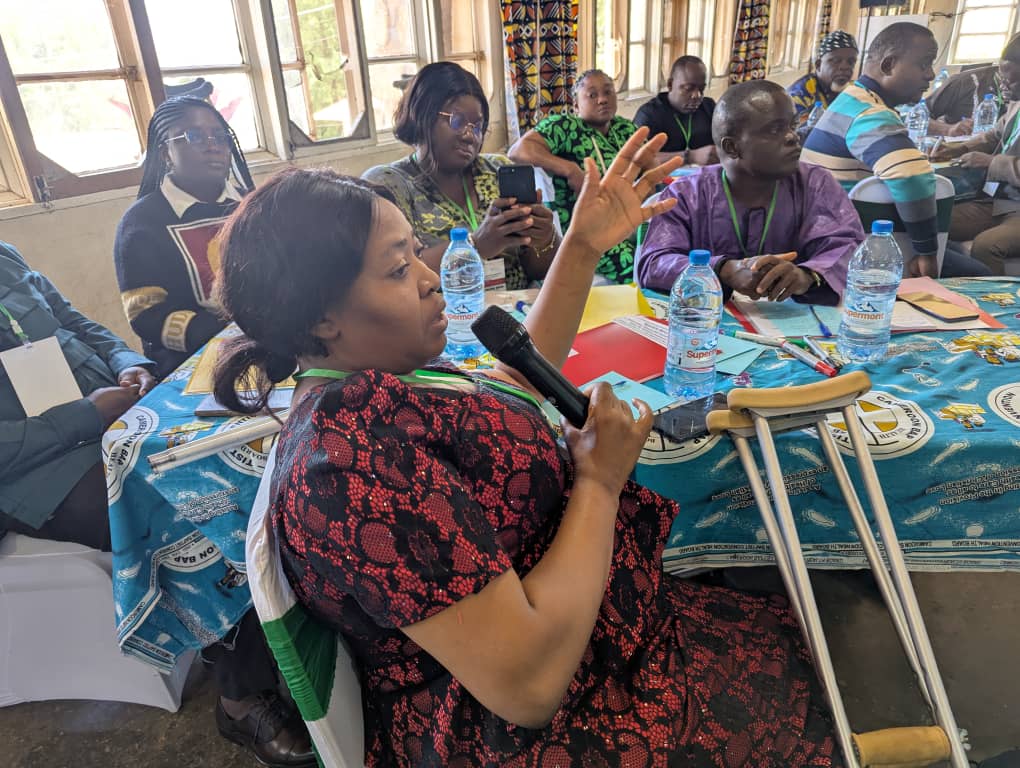
Participants with various disabilities shared their experiences since the start of the socio-political crises in the Northwest and Southwest Regions of Cameroon. Some individuals with visual impairments have been caught in gunfire exchanges, making them very vulnerable because they cannot escape as easily as others without disabilities. Communication has been difficult for those with hearing impairments, who can only see others running during gunfire because they cannot hear. Those with mobility impairments have sustained serious injuries when everyone else is trying to escape, and no one helps them or does so only later. One question on everyone’s mind was, “What people with disabilities can do in such situations?”
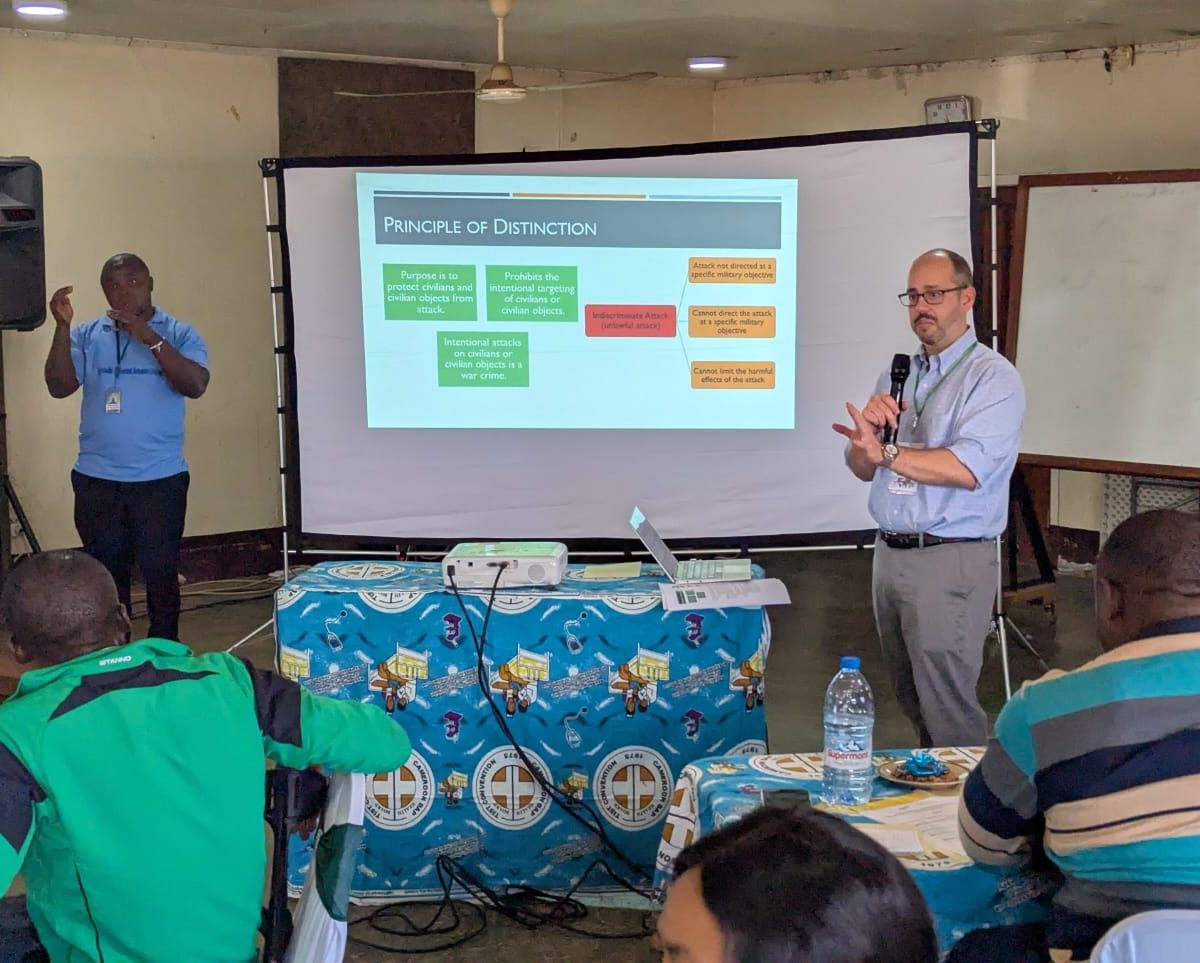
The main facilitator, Williams I. Pons, pointed out that IHL applies to all conflicts, regardless of the reasons or parties involved, including Cameroon. He described IHL as a legal framework that aims to limit the harmful effects of armed conflict. “IHL does not stop or make conflict illegal; instead, it regulates behavior,” he emphasized.
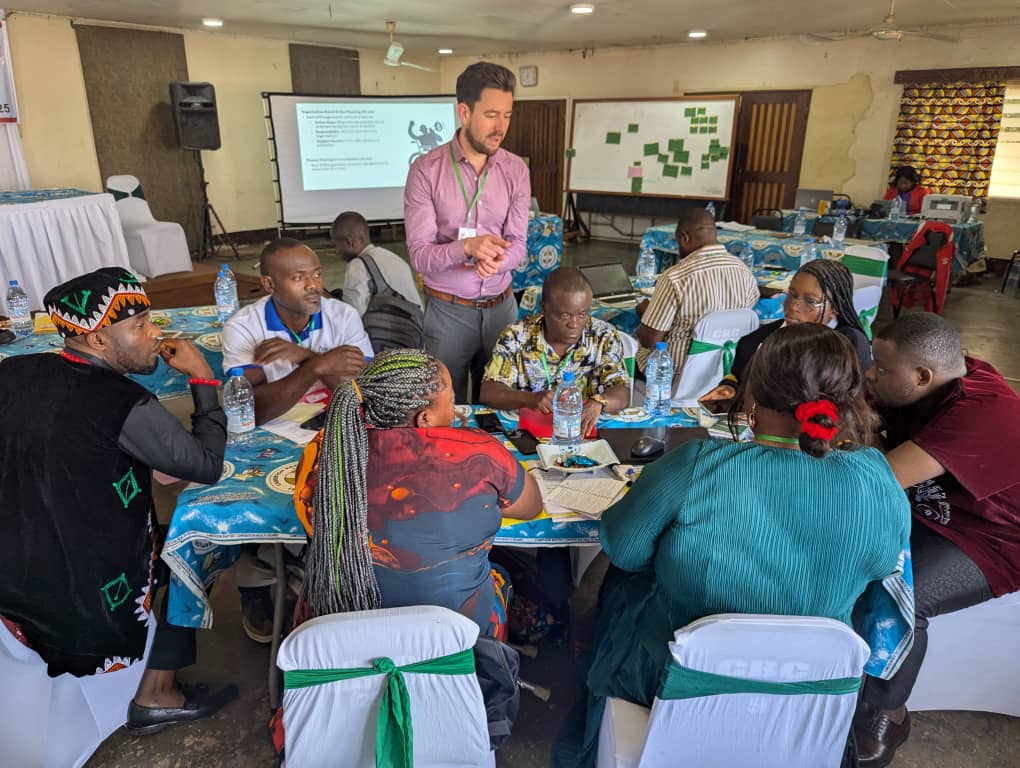
Oliver Wiegers led work sessions with the participants during which they identified activities and persons to be responsible for implementing for the next 6 to 9 months. As they returned to their base, they were empowered with the legal instruments, which would guide them to carry out awareness and advocacy on their right.
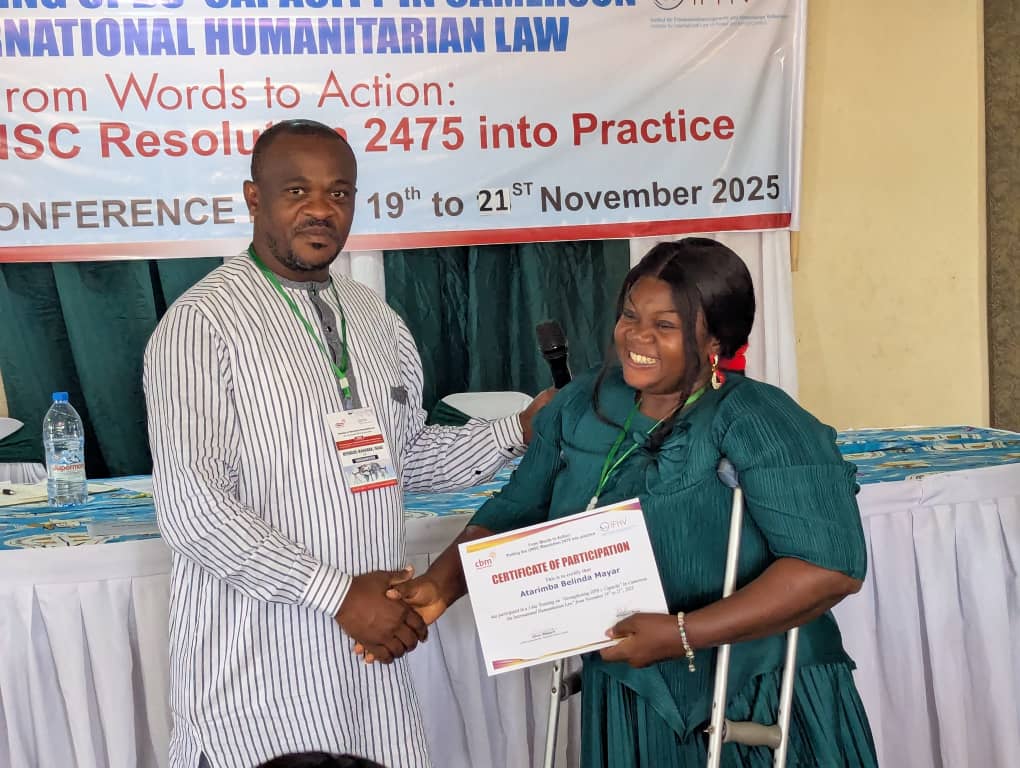
The CBM Humanitarian Coordinator and the SEEPD Program Manager appreciated the facilitators for empowering persons with disabilities with legal instruments on their rights. At the end of the training, an Attestation of participation was handed to the participants who are poised to make their voices heard at all levels through awareness raising and advocacy on the legal instruments. The CBM team applauded CBC Health Services SEEPD Program for hosting the workshop and giving it the attention it deserves.
Earlier, the CBM team had a one-day meeting with the Inclusive Humanitarian Health and Protection Response in the Northwest Region of Cameroon project staff to understand the state of activities implementation 5 months into the project. The Project Coordinator, Ful Morine, presented the strides and challenges recorded. She disclosed that 12 health outreach screening programs have been organized in different health areas, during which beneficiaries benefited from different services like Ear, Eye, Physiotherapy, and general consultation. Some 200 girls and young women, including those with disabilities, received dignity kits to support them in their healthcare. The objective of the outreach programs is to take health care closer to the poorest of the poor.
The CBM International Humanitarian boss, Oliver Wiegers expressed satisfaction with the pace of activities’ implementation and the success rate of the project. They pledged their willingness to support the project team in implementation.
It should be noted that the objective of the project is to alleviate the suffering of people with and at risk of disabilities in crisis-affected hard-to-reach communities in the Northwest Region.